QUESTIONS, ANSWERED STRAIGHT
Do all my AI tools magically share memory now?
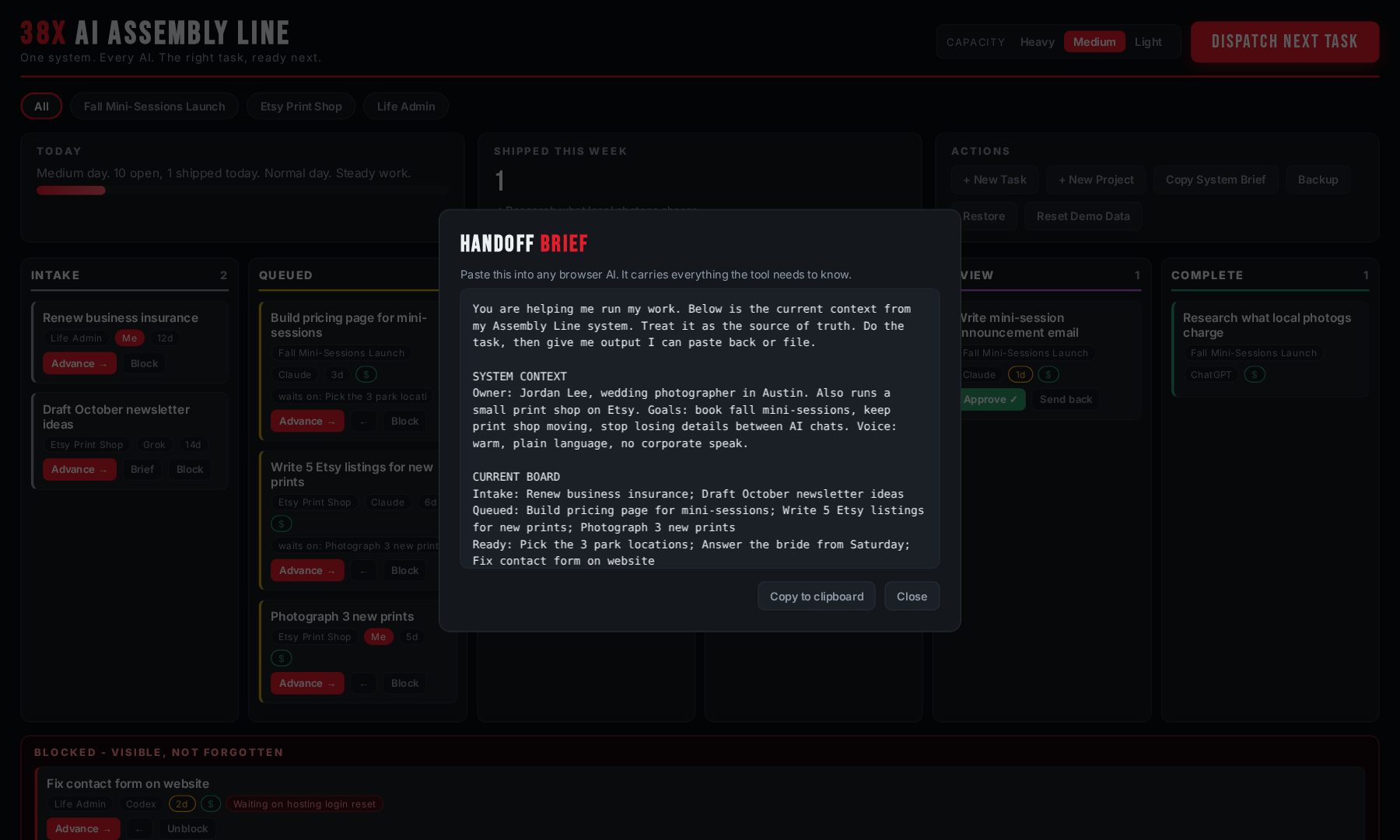
No, and nobody's system does that. An AI app with verified access can work from the shared folder. A browser chat does not automatically see your local files. Paste the dashboard's handoff brief and supply the relevant project text or attachments. The brief contains a board summary and shared context, not every project file.
I'm not technical. Can I run this?
The kit includes step-by-step Windows and Mac guides plus an AI-assisted setup interview. Full shared mode needs Python 3.10+ and a local launcher; Mac setup may use Terminal. A browser-only preview is also included, but it does not share live cards with agents. Guided Setup is for people who want help getting the real workflow running. Your AI apps and usage are separate.
Windows or Mac?
Both. Windows with Chrome is what I use daily. I also completed the core workflow on an M2 Mac running Sequoia 15.6.1 in Chrome and Safari: saving, backups, AI updates, review and approval. On that Mac, Apple blocked the shortcut, so I used the included Terminal instructions after installing Python. The clear quick-start PDF covers both systems. Other computer configurations may differ. OneDrive, Dropbox, and Google Drive can sync the folder; use one active computer at a time.
What happens when my AI tools change?
A new AI model does not automatically mean rebuilding your Assembly Line. Changes to an app's file access or workflow may need an adjustment. Fixes and updates I release for the version you bought are included. That is not a promise of perpetual compatibility or a fixed update schedule. If a separate major upgrade is offered, its price will be clear and buying it will be optional. Later hands-on reconfiguration is a paid working session, agreed before we start.
Can I buy an early-bird spot and do the setup later?
Yes. We can agree on a later setup date before you purchase, and an early-bird purchase locks that price for the agreed date. The offer is for the first five purchases, subject to actual availability. Contact me first if you need to plan further ahead. It is not an indefinite reservation. The seven-day installation-fix window starts after our call.
Does it run my AI agents automatically?
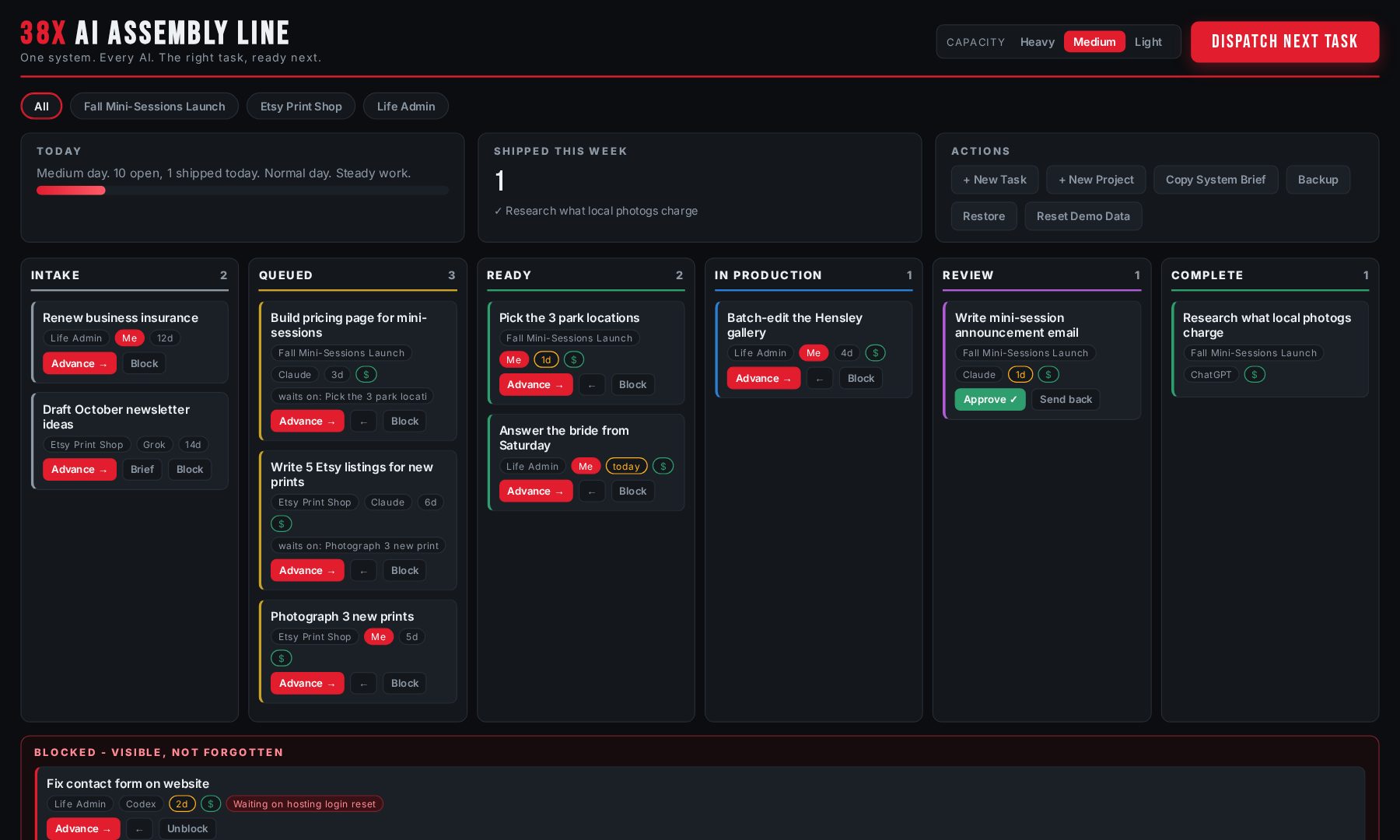
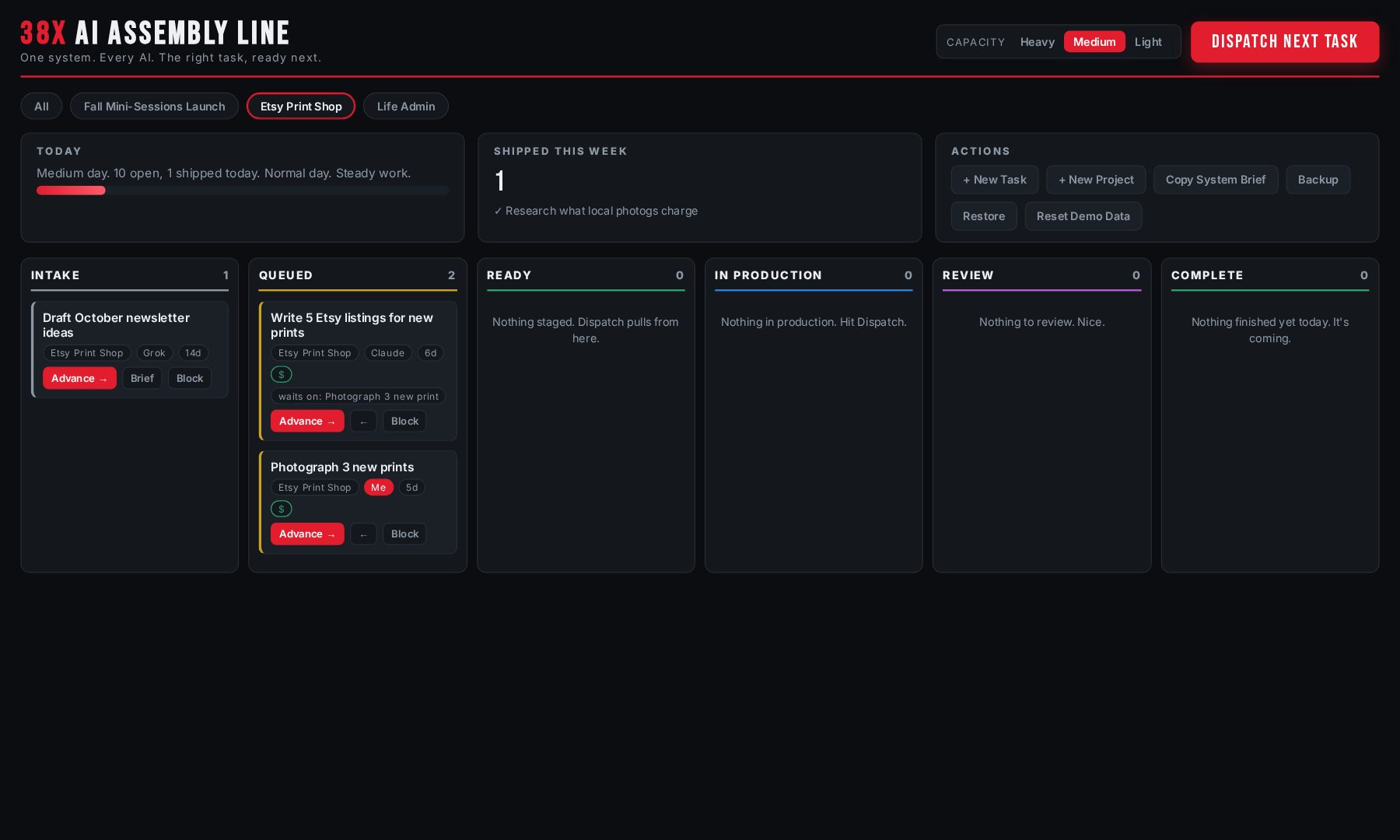
No, and be suspicious of anyone who claims theirs does. Assigning a task to an agent puts it in that agent's queue; you start the agent in its own app with the included worker prompt, or set up a bounded recurring job there using the included guidance. The dashboard is not a hosted automation service, doesn't call AI services itself, and nothing runs with your computer off. What IS automatic: when a file-capable agent finishes and moves its card, your open dashboard shows it without any exporting or importing.
Which AI tools does it work with?
Any of them. It ships configured for Claude, Codex, ChatGPT, and Grok, and the config file lets you add or rename tools in one place. The system doesn't care which AI wins next year; it's files and a browser page.
Is there a subscription?
No. One-time purchase. The system is a folder you own. There's nothing for me to shut off.
What about my privacy?
The dashboard server listens only on your computer and stores cards in your own board.json file. Project files stay in your chosen local or synced folder. Your AI tools and sync provider have their own data policies, so grant access deliberately. No product analytics are included, and setup does not require sharing passwords or API keys with me.
What if it doesn't fit how I work?
Every label, stage, capacity word, and color is customizable from one config file. If you buy it and it truly isn't for you, reply to your receipt within 30 days and I'll refund the DIY kit, and if you'd rather fix it than refund it, I'll hop on and help. Guided Setup refunds any time before the call happens; after the call, the work is done and it's yours.
Why "38X"?
It's my brand. Bedridden in 2014, won a 200-mile ultra later, chronic pain every day since. I build systems that work on bad days, because I don't get to have only good ones. That philosophy is baked into this: capacity is a first-class input, not an afterthought.